Subscribe by Email

Your email:

download-catalog

Posts by category

Behavioral Research Blog

Current Articles | RSS Feed RSS Feed

The power of zebrafish in the study on Parkinson’s Disease


zebrafish pd model

Zebrafish have proven to be a good model for Parkinson’s Disease (PD) research, as I already wrote about in Zebrafish with Parkinson’s. They express several highly conserved genes that are associated with PD. Lopes de Fonseca et al. recently published about another interesting protein that has been linked to cases of PD in humans that run in families (familial).

CatWalk gait analysis versus treadmills


CatWalk-XT-Runway

Traditionally, there are two fundamentally different ways to analyze gait in animals. One can either observe or measure gait in an unrestricted manner, or in a forced manner, as seen when using a treadmill or treadwheel.

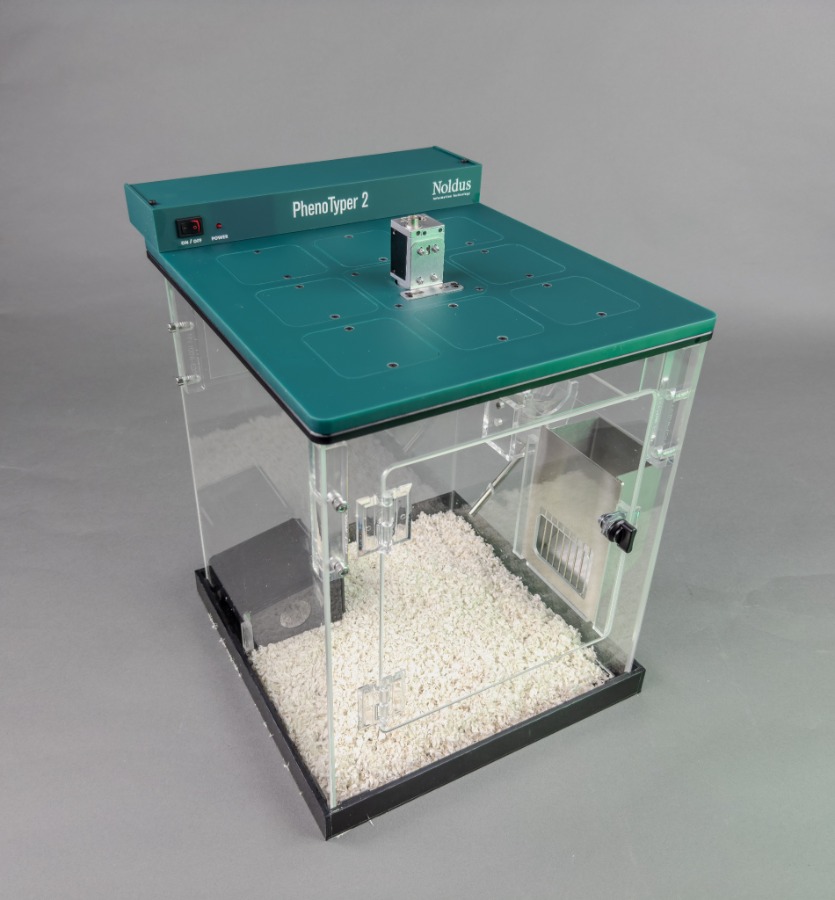
Testing without stress: high-throughput phenotyping in a home cage environment


Mouse

The importance of being flexible
The ability to recognize harmful situations and respond accurately is important for the survival of any animal. In order to respond to these situations the animal must be able to learn, remember, and alter its behavior. Deficits in these abilities are associated with many affective and psychiatric disorders, like Schizophrenia and ADHD.


Classroom observations including facial expression analysis


Teenagers in a classroom

Internet and technology usage, including computers, tablets, and mobile phones, has increased exponentially in the past few years. Besides the fact that people are becoming accustomed to a variety of technology in the workplace and at home; technology has also entered other domains such as in schools, libraries, shopping malls, and restaurants.

Five tips on how to measure facial expressions


Five tips

1 Record video

It may sound very simple, but recording video and playing it back enables more detailed analysis of facial expressions. When only annotating events and facial expressions live without recording it on video, it is likely the annotator may miss essential information. When making video recordings, it can still be difficult to record the face. For example, Forestell and Mennella (2012) recorded infants as their mothers fed them green beans in order to objectively quantify infants’ facial expressions by manually coding Action Units. In this study 16 mother-infant dyads had to be excluded because the infant’s face was partially or fully occluded during the feeding session. Fortunately, the researchers had a final sample of 92 dyads, which was sufficient to finish their study.

Tracking zebrafish activity to study a key element in circadian rhythmicity


Zebrafish larvae

Zebrafish are a popular model of choice for many researchers, including chronobiologists. That’s because zebrafish rapidly develop their ‘inner clock’ – their circadian system – and because this system is highly light-entrainable.

Early Infant behavior development of hand preference


Right-hand-use

Why measure handedness
There are many reasons to study the development of hand preference in infants. For one thing, being left-handed can be an advantage in one-on-one sports such as tennis. For example, Rafael Nadal is a left-handed player and with this natural advantage, he is now a star tennis player with many successful matches to his name. The advantage being, in a population with a left-handed minority and a right-handed majority, the left-handed Rafael Nadal plays most of his matches against right-handed opponents and is therefore well-practiced at dealing with this asymmetry. A right-hander plays the majority of his matches against other right-handers. In conclusion, when confronted with left-handers, they are less practiced, thereby giving the lefty a natural advantage.

Measuring handedness in infancy
Recently, Nelson et al. presented “Unimanual to bimanual: Tracking the development of handedness from 6 to 24 months”. One of their findings was that, as infants, 39% of these children showed preference for the right hand, whereas 61% had no hand preference. In toddlerhood, this 39% increased to 97%. This study provides some evidence that handedness might begin to stabilize earlier than traditionally assumed. However, in order to confirm this conclusion, more research was required.

Nelson et al. were particularly interested in asymmetric bimanual actions. Nelson et al. explain: The current study is the first longitudinal attempt to connect unimanual and bimanual preferences, and emerging handedness patterns, over repeated monthly assessments in a large group of developing children (N = 38). They focused on actions where two hands work together to achieve a goal, a skill known as Role-Differentiated Bimanual Manipulation (RDBM).


Observing monkey behavior – cracking the nut


Monkey CopyR Bart Wright

Smart monkeys
We already know some monkeys display above average intelligence. One way by which we can tell is their use of tools. Behavioral studies have shown that capuchin monkeys use boulders and logs as anvils upon which they can crush nuts. Furthermore, these monkeys have demonstrated that they are able to identify hammer stones best for cracking, and nuts that are easy to crack.

Photo courtesy of Barth Wright.

Fragaszy et al. decided to add to this knowledge-base with their behavioral study, which was recently published as Wild Bearded Capuchin Monkeys (Sapajus libidinosus) Strategically Place Nuts in a Stable Position during Nut-Cracking. This publication in PLOS ONE elaborates upon the detailed study of monkey behavior, specifically the placement of nuts prior to striking them. An interesting detail: they studied this same behavior in humans as well.


Top 5 Consumer behavior research on the Behavioral Research Blog


Supermarket

Observational research is becoming more and more popular in consumer science and market research. From on-site behavioral observations in supermarkets to advanced multimodal lab studies, researchers are more and more familiar with measuring and observing participant behavior. Researchers combine for example the measurement of behavioral and physiological data in order to get a more complete picture of the person’s response.

Celebrate the 6th World Autism Awareness Day


Today is the sixth World Autism Awareness Day. Every year, autism organizations around the world celebrate the day with unique fundraising and awareness-raising events. How can we join the celebrations?

In celebration of World Autism Awareness Day, today’s blog post focuses on autism research and the upcoming International Meeting for Autism Research in San Sebastian, Spain.


All Posts